
Building for Love: Creating Authentic Connections
Get inspired on how to build products that stand out by focusing on user emotions and intentional design choices.

Creating digital products goes beyond functionality; it’s about designing meaningful experiences that emotionally resonate with users. In a world of billions of apps, only a few become essential in users' lives. To build products that stand out, focus on user emotions, intentional design choices, and the pursuit of joy, not just solving problems.
Building Digital Products People Love
“What's love got to do with it”? Can an app create happiness?
Every day, we interact with countless apps. One app to wake up, a boring one to pay the bills, another to share that funny joke about working life. Apps help us get things done. While some are more efficient or more visually appealing than others, they don’t necessarily bring happiness, especially after seeing a lower-than-expected bank balance.
In May 2025, Apple's App Store hosted approximately 1.93 million apps and 205.998 games, with an average of 1.507 new apps added daily. In this endless ocean of options, choosing the right app can feel overwhelming.
Even after an app is discovered and downloaded, keeping users engaged remains a greater challenge. By the 90-day mark, around 71% of users have stopped using an app entirely. According to a 2018 report by Localytics, only 9.4% of users continue using an app two weeks after downloading it. So, what is the secret of the 29% successful apps? How can an app live happily ever after on users’ home screens?
Developing for humans means understanding their need for an authentic connection. It’s all about personalisation, flawless timing notifications, and no stalking feeling. It’s less about a product and more about the story being told. Prioritise building something for 100 people to love rather than something 1.000 will like.
Be the one
To be among the 29% of surviving apps, being just "okay" isn't enough. Good design goes beyond function –it evokes emotion, shaping how users feel and decide. Decisions are often made by the emotional half of the brain, with the cognitive half stepping in to rationalise afterwards. That’s why understanding and measuring the positive (and negative) emotions an app produces can predict its success.
An app’s ability to meet a real need –whether solving a problem, reducing pain, or completing a task– also influences its lasting power. Designing for happiness means combining small, delightful moments with a broader purpose.
When shaping a product, tracking the emotions it evokes can help predict whether it will thrive or fade. The apps that endure are those that blend usefulness with joy, creating experiences that truly resonate.
But crafting such an experience doesn’t start with grand ambitions or endless feature lists. It begins with focus. Instead of creating a gigantic backlog in the first weeks of the project, center on clarity and purpose. A big vision is great, but success is achieved by taking calculated, small steps. Focus on the core, on the must-have feature that brings value. Gather users’ feedback, release an update, and repeat. Focus on clarity and make the soul feature easily accessible in just a few taps. Rethink the metric of success. Conversion rate or bounce rate matters, but user confidence while using the services should matter more.
This philosophy –of care through detail– is something Apple has widely recognized for. Aspects that might seem inconsequential, like how a cable is wrapped and unwrapped. The company turned these details into part of its brand, marketing the entire product experience rather than just the device itself. When you unboxed an iPod or iPhone, it was immediately ready to use, a deliberate contrast to many electronics of the 1990s that often required a full charge before first use. These small, tactile interactions were never accidental. They were deliberately crafted experiences to evoke a sense of care.
Most users wouldn’t consciously notice these details, but they would feel them. The smoothness of the unboxing, the precise folds, and the tactile rhythm of removing each component all subtly communicated that someone had thought deeply about the experience. This is where design transcends aesthetics and becomes emotion: not just seen, but sensed. The same principle applies in app environments. Users may not consciously recognize a perfectly timed animation or the thoughtful ordering of onboarding steps –but they feel it. Seamless navigation, intuitive gestures, and small moments of delight convey the same care as an elegant unboxing. In both hardware and software, emotion is crafted through details that anticipate needs, reduce friction, and transform utility into experience.
Design is care, and the experiences we shape and deliver will be defined by how people sense that care in the future. — Ben Holliday
People are different, but the same person has different contexts, and they will use apps when they need, not always as the developers planned. Someone might need to check a message between meetings. A person might be walking on a sunny day with a cracked glass while buying a bus ticket. Is your app enabling people to escape their messy lives?
Users are humans first, and they bring their emotions with them. Designing with empathy means considering how people feel and what they think. This involves making thoughtful decisions –reducing cognitive load, presenting information in digestible pieces, and structuring content with a clear hierarchy. Embracing the fact that people make mistakes and offering forgiving flows, back, undo, and autosave can be the difference between delight and abandonment.
What we make stands as a testament to who we are. And what we make describes our values. (…) Try to design something that genuinely attempts to move the species on. — Jony Ive
Joy in a product is often mistaken for being trivial. Yet, apps can genuinely impact people’s lives. Emotionally connected customers are 52% more valuable to brands. If apps are joyful, users will naturally engage more, thereby boosting business metrics such as OKRs and KPIs. A delightful and well-designed product will be used more, enhancing business metrics.
Emotional Design
Emotional Design is a UX and product design framework. It divides emotional responses to design into three levels: visceral, behavioural, and reflective. Those levels can endorse product design decisions to create experiences that bring delight.
Visceral
Aesthetics and attractiveness.
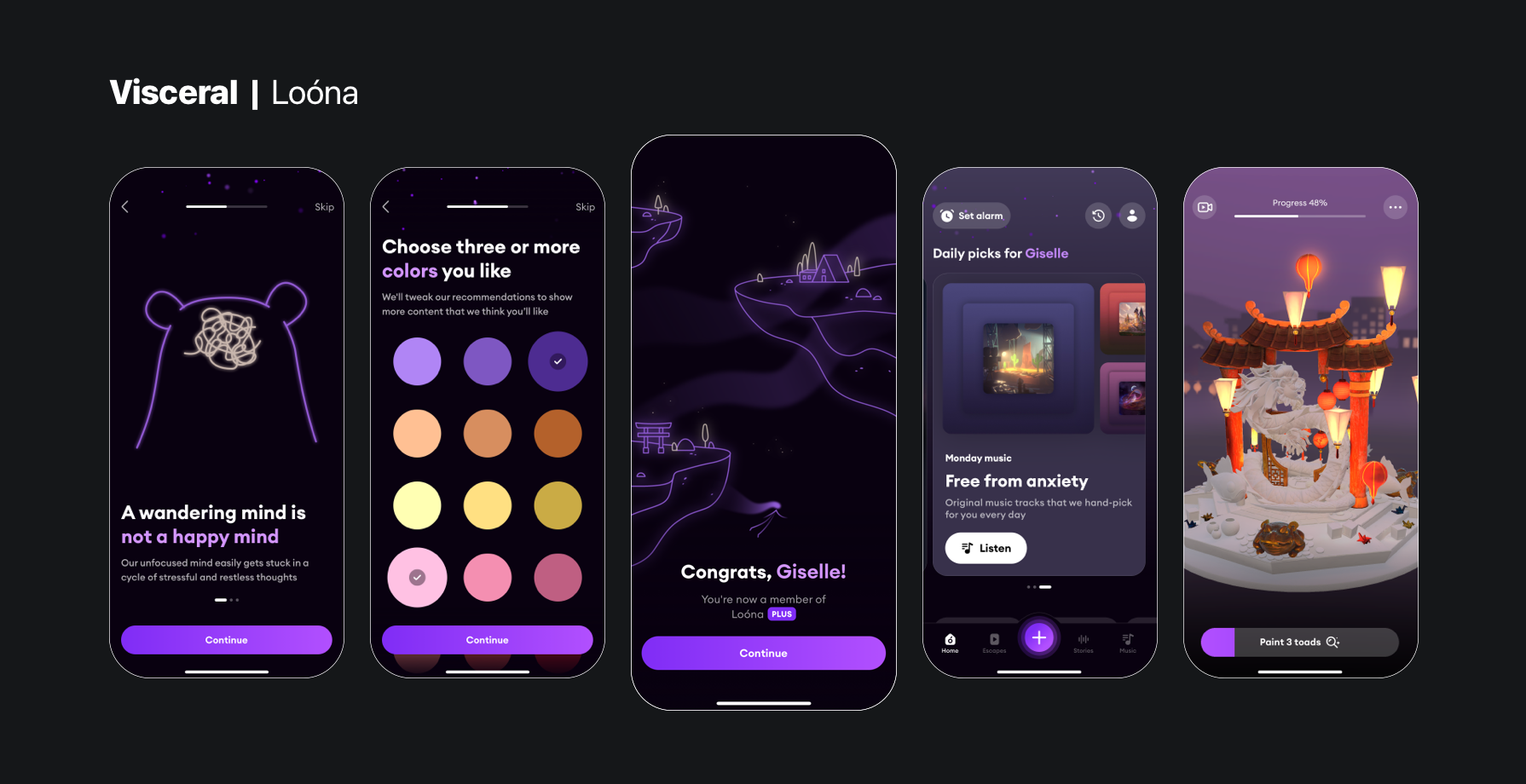
It's the first impression, it's how the product looks and feels at first glance. It’s by far the most important moment of an app, as users often decide within seconds whether to keep or delete an app.
Behavioural
Functionality and ease of use
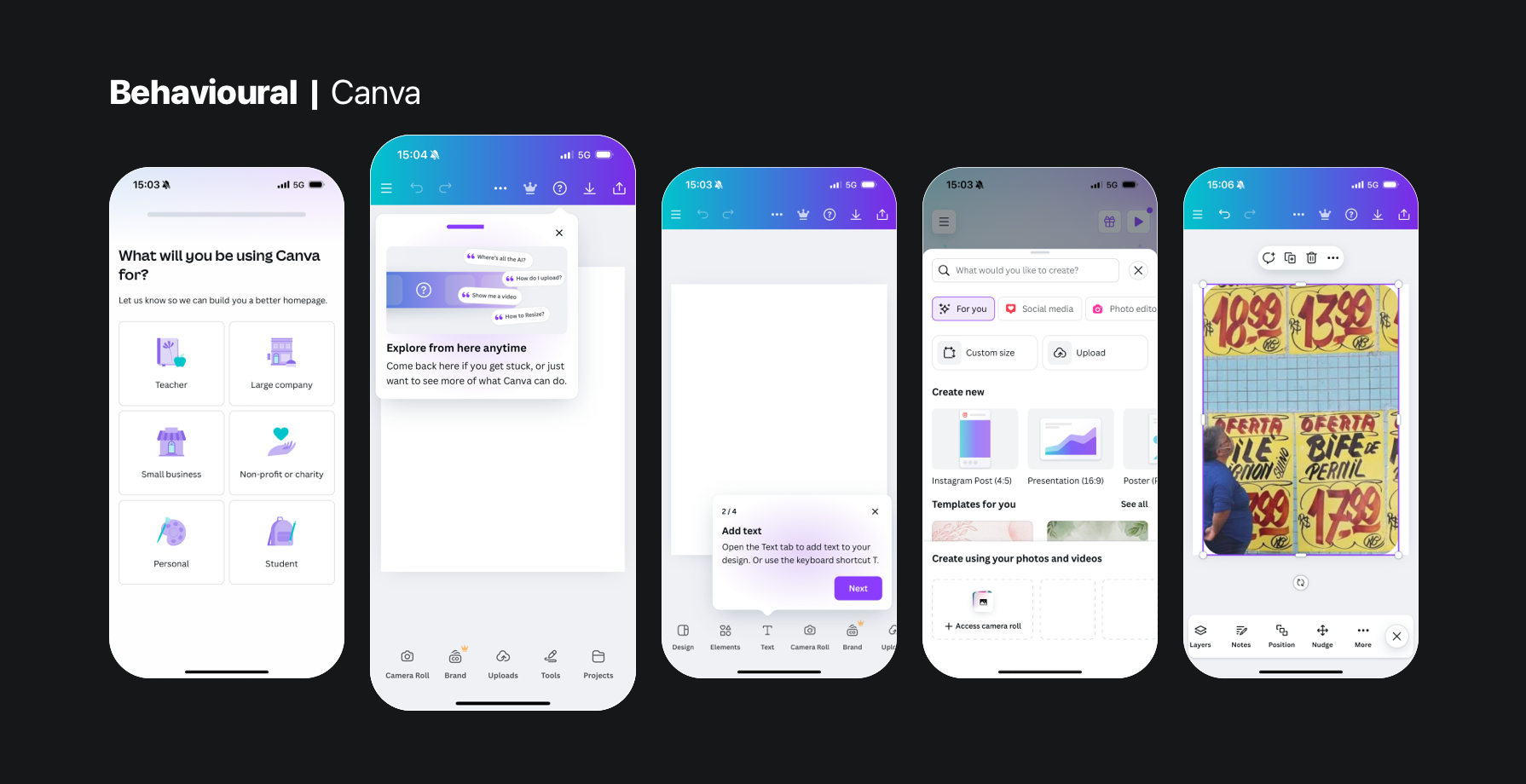
This is how the app behaves, and the cognitive effort required to complete a task in the app. It is connected to how easy it is and how fast it works.
Reflective
the lasting impression
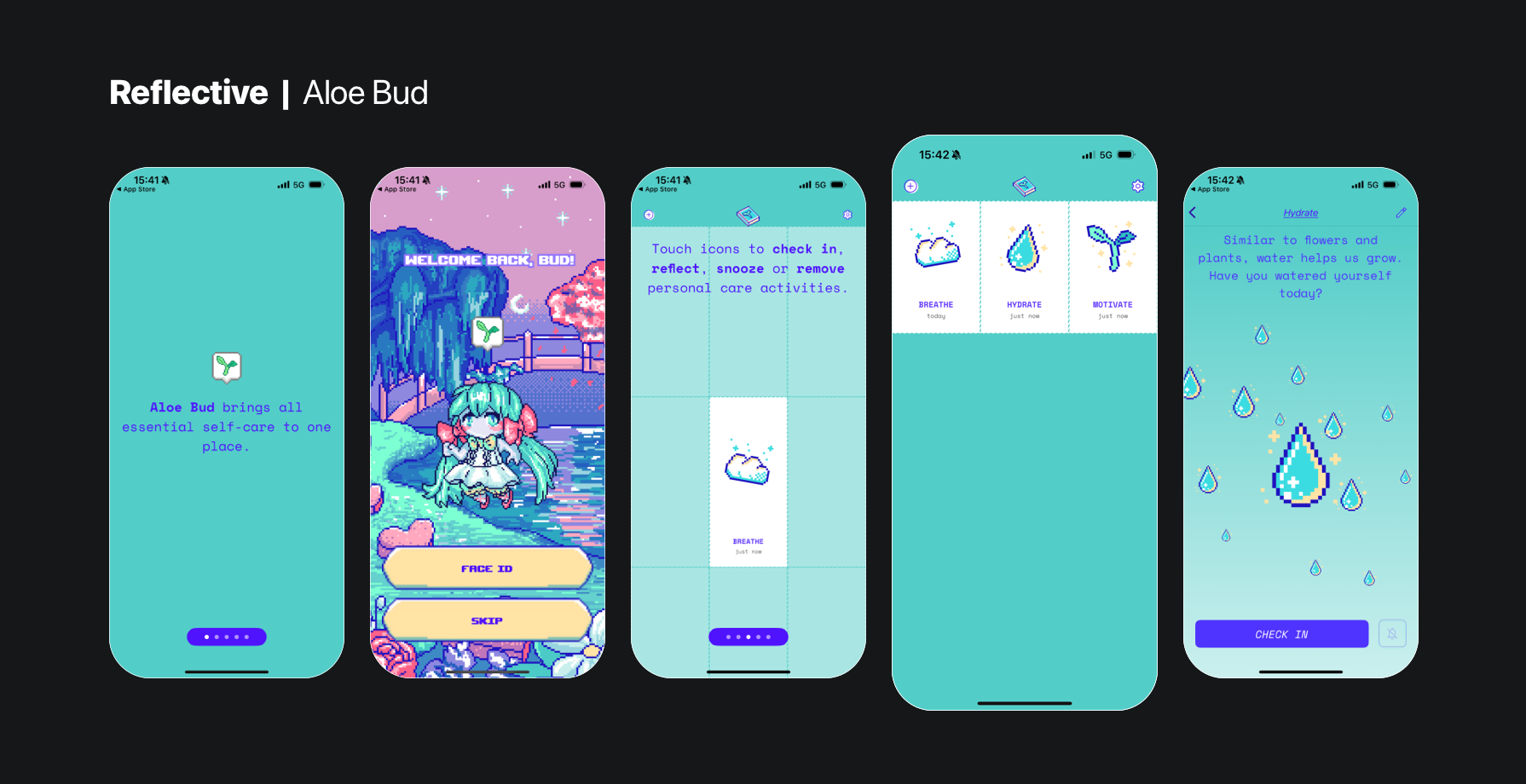
Connected to the cultural significance and long-term user relationships with an app. It's connected to the thoughts users create before opening an app, during use, and after use. This is how users express their emotions about the app to the people around them. Positive experiences build loyalty, while negative ones spread quickly.
Injecting Creativity
Creativity is often associated with positive emotions linked to a favourite app or device. It’s about offering playful, non-committal experiences, such as a banking app that lets users experiment with loan calculators or a health app that suggests popular searches without collecting private data.
Creating an app for love means designing with empathy –giving humans products and services tailored to them. Deliver an app that supports users in completing tasks without effort. Remember that people are different, and create products accessible to everyone. And never forget the KISS Principle: "Keep it simple, stupid". A decent app helps users accomplish their tasks. A good app helps users get tasks done faster. A great app makes it effortless to complete a task. A lovable app evokes confidence, making users feel secure and in control. User journeys are clear and deliver the same result, no surprises.
Bill Atkinson built software that went beyond just accomplishing tasks –it made people want to explore and play. He understood that the best tools don’t just make work faster; they make work feel more creative. – about MacPaint, Figma
Tools
This philosophy continues to inspire tools and frameworks designed to bring emotion back into technology.
Lovable.dev, for instance, goes beyond building functional interfaces by offering principles, tools, and examples for creating emotionally resonant and ethically designed experiences.
Affectiva takes this further with its emotion recognition software that analyzes facial expressions and physiological responses to measure users' emotional reactions. It translates how users emotionally respond to different design elements.
Make It Matter
In a world flooded with digital solutions, the products that truly last aren’t just efficient, they’re meaningful. They show care in every tap, produce joy in the smallest interactions, and build lasting emotional bonds. Designing with emotion isn’t just a nice-to-have; it’s a strategic advantage. It’s what separates an app that’s used from one that’s loved.
To create products people return to – and recommend – go beyond solving problems. This is where emotional design thrives: at the intersection of utility and humanity.
People don't remember how fast an app loaded; they remember how it made them feel. So if you're going to build something, build something worth feeling.